OpenClaw isn't just another name in the AI space. It's the clearest signal yet of a quiet but powerful wave reshaping enterprise AI: the self-hosted AI revolution — where businesses no longer need to depend on OpenAI's, Microsoft's, or Google's black boxes to run their intelligence infrastructure.
In 2026, the question is no longer "What can AI do?" It's "Where is your AI running, and who controls your data?"
1. What Is OpenClaw — and Why Does It Matter?
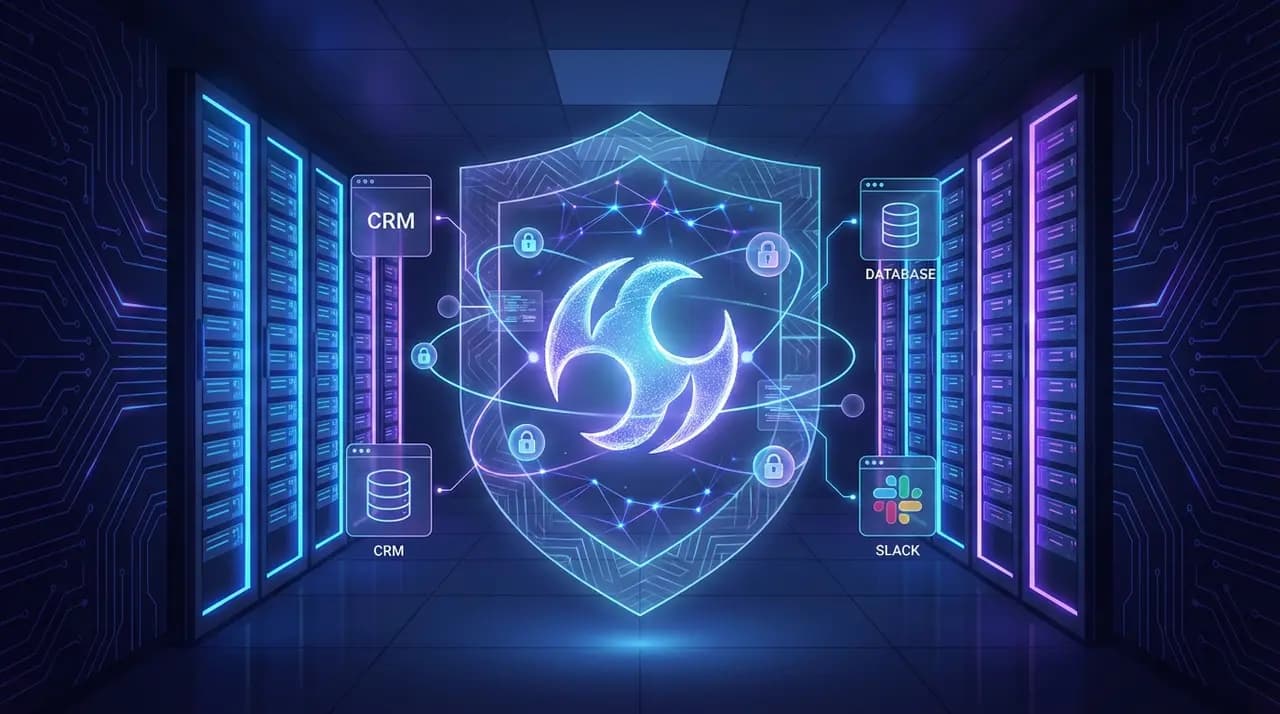
OpenClaw is an open-source AI assistant platform designed for complete deployment on your own infrastructure — whether that's on-premises servers, a VPS, or a private cloud. No API keys phoning home to foreign servers. No customer data leaving your firewall.
But what makes OpenClaw truly remarkable isn't just "self-hosted." It's its plugin-first architecture that enables direct connections to:
- Internal databases (PostgreSQL, MySQL, MongoDB)
- CRM/ERP systems (Salesforce, SAP, HubSpot)
- Communication tools (Slack, Teams, internal email)
- Knowledge repositories (Confluence, Notion, SharePoint)
The result? An AI assistant that genuinely understands your business context — not a generic chatbot giving internet-sourced, one-size-fits-all answers.
"OpenClaw gives every employee a C-suite-level AI assistant — one that understands your company's actual context, not the internet's." — OpenClaw development team
2. The Big Picture: What's Wrong With Cloud AI Today
Millions of businesses use ChatGPT, Copilot, and Gemini daily. Most of them don't realize the hidden risks accumulating beneath the surface:
2.1 Data Risk & Regulatory Compliance
When employees paste client contracts, pricing strategies, or internal code into ChatGPT — that data flows through OpenAI's servers hosted abroad. Under GDPR (EU), data localization laws across Southeast Asia, or financial and healthcare regulations, this is extreme legal grey territory.
Samsung famously banned ChatGPT company-wide after employees accidentally shared proprietary source code. Hundreds of law firms, banks, and hospitals face the same exposure today.
2.2 Uncontrollable Costs
The "pay-per-use" model sounds economical — until you scale. With 100 employees using AI an average of 2 hours per day, API costs can climb to $8,000–$15,000/month with no hard spending ceiling.
2.3 Vendor Dependency — "AI Lock-in"
When OpenAI changes pricing, deprecates a model, or suffers downtime — your entire workflow freezes with it. In 2024, GPT-4's context window was suddenly reduced, breaking thousands of enterprise applications overnight — no warning, no migration window.
Self-hosted AI like OpenClaw solves all three problems simultaneously.
3. OpenClaw Architecture: What "Self-Hosted" Really Means in Practice
OpenClaw is built on a modular microservices architecture with 4 core layers:
Layer 1 — Model Layer
Runs any LLM via Ollama or vLLM:
- Llama 3.3 70B — balanced performance-to-hardware-cost ratio
- Mistral Large — strong multilingual reasoning for European languages
- Qwen 2.5 72B — exceptional for Chinese and Vietnamese
- DeepSeek R1 — advanced mathematical reasoning and code generation
Layer 2 — Memory & Context Layer
OpenClaw doesn't just "remember" conversations — it builds a persistent knowledge graph about users, projects, and the organization over time. Each employee has their own separate, continuously updated long-term memory.
Via the MCP (Model Context Protocol) standard, OpenClaw connects to hundreds of tools without custom integration code. This is exactly why modern AI Agents use MCP to connect to enterprise systems — and OpenClaw leverages this capability to its fullest extent.
Layer 4 — Access Control Layer
Granular permissions via RBAC (Role-Based Access Control):
- Sales staff only see CRM data and customer pipelines
- Engineers only access repositories and technical documentation
- C-suite gets the full organizational picture across all systems
4. Head-to-Head: OpenClaw vs ChatGPT Enterprise vs GitHub Copilot
| Criteria | OpenClaw | ChatGPT Enterprise | GitHub Copilot |
|---|
| Data Security | Fully on-premises | OpenAI servers | Microsoft servers |
| Model Flexibility | Any LLM | GPT-4o only | Codex/GPT only |
| Monthly Cost (100 users) | ~$500–$1,500 (infra) | ~$3,000 | ~$1,900 |
| Internal Integration | Unlimited | Limited | IDE-only |
| Offline Capability | Yes | No | No |
| Vendor Lock-in | None | High | High |
| Time to Deploy | 1–2 weeks | Immediate | Immediate |
The takeaway is clear: OpenClaw requires more initial setup investment, but delivers superior ROI from month 3 onward.
For organizations with 50+ employees, self-hosted AI typically saves 60–75% over 12 months compared to commercial SaaS alternatives. And unlike traditional chatbots constrained by rigid scripts, OpenClaw operates as a true AI Agent — context-aware, flexible, and capable of real decision-making across your systems.
5. Next Steps: Deploying OpenClaw with Autonow
Knowing about OpenClaw is one thing. Deploying it correctly so your organization can actually use it and generate real value — that's something else entirely.
Autonow has deployed OpenClaw for multiple enterprises across Vietnam and Southeast Asia. Our standard roadmap runs 4 phases:
Phase 1 — Assessment (Week 1)
Evaluate existing infrastructure, identify integration requirements, and select the right LLM for your language needs and industry context.
Phase 2 — Core Deployment (Weeks 2–3)
Install OpenClaw, configure the model layer, set up RBAC permissions, and connect your first internal data sources.
Phase 3 — Integration Sprint (Weeks 4–6)
Connect all business systems (CRM, ERP, Slack, email) and fine-tune prompt templates for each department's specific workflows.
Phase 4 — Training & Handover (Weeks 7–8)
End-user training, process documentation, system handover, and ongoing operational support.
If you're considering expanding into more sophisticated architectures, don't miss our deep-dive on Multi-Agent Systems — when you need more than one AI working together.
Conclusion: Self-Hosted AI Is No Longer "Just for Geeks"
Three years ago, self-hosting an LLM required a dedicated ML engineering team and enormous hardware budgets. In 2026, with OpenClaw and tools like Ollama, a 50-person company can fully operate an enterprise-grade AI assistant on a $3,000 server.
The question isn't whether you should self-host AI — it's whether you can do it right yourself, or whether you need a partner like Autonow to get it right from day one.
Let Autonow guide you on that journey.
Book a free consultation →